
Comprehensive Guide to American Safety Clothing for Workplace Protection
American Safety Clothing: A Comprehensive Guide
When it comes to workplace safety, choosing the right protective clothing is paramount. American safety clothing provides a crucial layer of defense against hazards in various industries. This article will delve into the importance of quality safety apparel, highlighting key features, standards, and applications, providing a thorough overview for professionals and safety managers. Selecting the appropriate garments significantly reduces the risk of injuries, ensuring a safer and more productive work environment. We'll explore the best practices for choosing and maintaining effective safety clothing.

The Importance of American Safety Clothing
American safety clothing isn't just about compliance; it's about protecting workers from potential harm. From high-visibility apparel to flame-resistant garments, these clothing items are designed to mitigate risks in a wide array of industries. Investing in quality safety clothing demonstrates a company's commitment to employee well-being, which can boost morale and reduce costly workplace accidents. Key considerations when selecting safety clothing include the specific hazards present in the work environment, the level of protection required, and the comfort and durability of the garments.
Key Highlights: Protects workers from potential harm, designed to mitigate risks, demonstrates a company's commitment to employee well-being.
Types of American Safety Clothing
The range of American safety clothing is extensive, catering to diverse industry needs. Some common types include:
- High-Visibility Clothing: Essential for workers in low-light conditions or near moving vehicles.
- Flame-Resistant Clothing (FRC): Protects against burns in industries like oil and gas, and electrical work.
- Chemical-Resistant Clothing: Shields against exposure to hazardous chemicals.
- Cut-Resistant Clothing: Protects against cuts and abrasions in manufacturing and handling sharp objects.
- Arc Flash Clothing: Critical for electrical workers, safeguarding against arc flash hazards.
Choosing the correct type of clothing depends on a comprehensive hazard assessment of the workplace.
Safety Clothing Benefits:
• Reduces the risk of workplace injuries
• Enhances worker visibility
• Complies with safety regulations
• Improves employee morale
American Safety Clothing Standards & Compliance
Ensuring that American safety clothing meets established standards is critical for worker protection. Key standards organizations include:
- ANSI (American National Standards Institute): Develops standards for high-visibility apparel.
- NFPA (National Fire Protection Association): Sets standards for flame-resistant clothing.
- OSHA (Occupational Safety and Health Administration): Enforces safety regulations and guidelines.
Compliance with these standards ensures that the clothing provides the advertised level of protection. Always look for clothing that is labeled with the appropriate ANSI or NFPA certification.
Proper Care and Maintenance of Safety Clothing
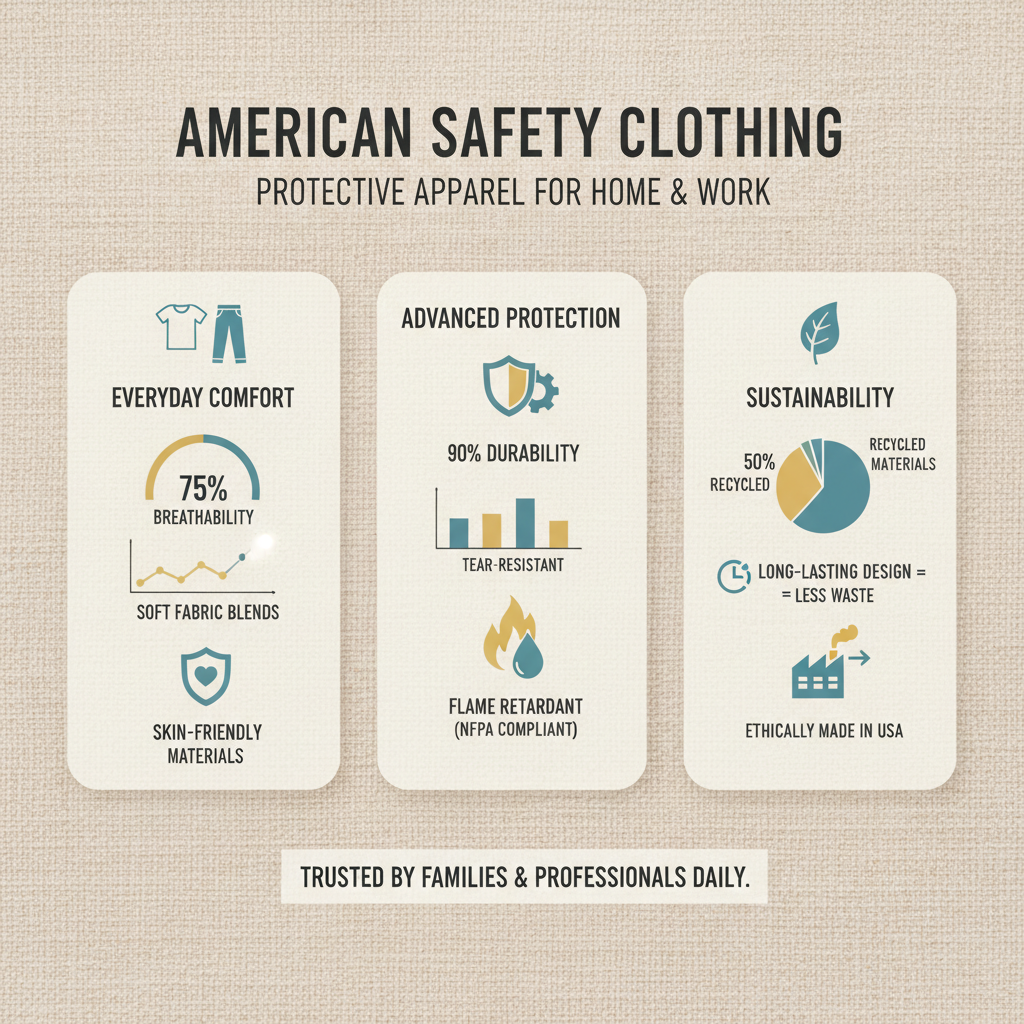
To ensure the longevity and effectiveness of American safety clothing, proper care and maintenance are essential. This includes following the manufacturer’s instructions for washing, drying, and storage. Regular inspection for damage, such as tears, holes, or fading, is crucial. Damaged clothing should be replaced immediately. Correct storage away from sunlight and harsh chemicals will also extend the life of the garments.
Conclusion: Investing in Safety and Protection
Investing in high-quality American safety clothing is a vital step in protecting your workforce and ensuring a safe and productive work environment. By choosing clothing that meets relevant standards, providing proper training, and implementing a consistent maintenance program, companies can significantly reduce the risk of workplace injuries. Don’t compromise on safety – choose the right apparel for the job.
Frequently Asked Questions (FAQs)
How often should safety clothing be replaced?
The frequency of replacement depends on the type of clothing, usage, and exposure to hazards. High-visibility apparel should be replaced if the reflective material becomes damaged or faded. Flame-resistant clothing should be replaced after a flash fire incident or if it shows signs of wear. Generally, all safety clothing should be replaced at least annually or more frequently if it's damaged or no longer provides adequate protection. Regular inspections are critical for determining when replacement is necessary.
What is the best way to clean flame-resistant clothing?
Flame-resistant clothing requires special care to maintain its protective properties. Always follow the manufacturer's instructions on the garment label. Typically, FRC should be washed in mild detergent, avoiding harsh chemicals like bleach or fabric softeners. Tumble drying on low heat is generally recommended. Avoid dry cleaning, as some solvents can reduce the flame resistance of the fabric. Proper cleaning ensures the garment continues to provide the intended level of protection.
Where can I find reliable suppliers of American safety clothing?
Finding reputable suppliers is essential for ensuring the quality and compliance of your safety clothing. Goodsafetyhelmet offers a wide range of certified American safety clothing from leading brands. Always verify that the supplier can provide documentation of compliance with relevant safety standards.
-
Industrial Protection Guide for Professional arco safety clothing
NewsApr.16,2026
-
The Ultimate Guide to Arc Safety Clothing for Electrical Protection
NewsApr.09,2026
-
Comprehensive Guide to Arc Flash Safety Clothing and Protection Measures
NewsApr.07,2026
-
American Safety Clothing Inc Your Premier Source for Workplace Safety Gear
NewsApr.04,2026
-
Comprehensive Guide to Womens Safety Clothing for Workplace Protection
NewsMar.31,2026
-
Comprehensive Guide to Selecting Optimal Waterproof Safety Clothing for Work
NewsMar.28,2026