Construction safety hard hats are a critical component of personal protective equipment (PPE) in the construction industry, and beyond. Globally, falls and head injuries are leading causes of workplace fatalities and serious injuries. A properly fitted and maintained construction safety hard hat significantly reduces the risk of severe head trauma from impacts, falling objects, and electrical hazards. Understanding their importance, proper usage, and evolving technologies is paramount for ensuring worker safety and minimizing costly incidents.
The construction industry, a major economic driver worldwide, faces inherent dangers. According to the UN’s Sustainable Development Goals, ensuring safe and secure working environments (SDG 8) is a key priority. Construction safety hard hats are a tangible demonstration of a commitment to this goal, directly impacting the wellbeing of millions of workers. The World Bank also highlights the economic benefits of prioritizing worker safety, reduced healthcare costs, and increased productivity.
The need for effective head protection extends beyond construction. Industries like mining, forestry, oil & gas, and even emergency response require robust headwear. Advancements in materials and design are constantly improving the level of protection offered, driven by both regulatory requirements and a growing awareness of worker safety.
The Fundamental Role of Construction Safety Hard Hats
The primary function of a construction safety hard hat is to protect the wearer's head from impact and penetration hazards. This includes falling objects, fixed projections, and accidental bumps. Beyond this core function, modern hard hats offer features like electrical insulation, enhanced ventilation, and integrated accessories like face shields and hearing protection.
The consistent and correct use of hard hats is often mandated by safety regulations and company policies. However, simply wearing a hard hat isn't enough. Proper fit, regular inspection for damage, and replacement when necessary are all crucial for ensuring optimal protection. Effective safety programs emphasize these aspects through training and ongoing reinforcement.
Defining Construction Safety Hard Hats
A construction safety hard hat is a type of helmet specifically designed to protect the head from impacts and penetration hazards encountered on construction sites and similar work environments. Unlike recreational helmets, they are engineered to meet stringent industrial safety standards, typically ANSI/ISEA Z89.1 in the United States or EN 397 in Europe.
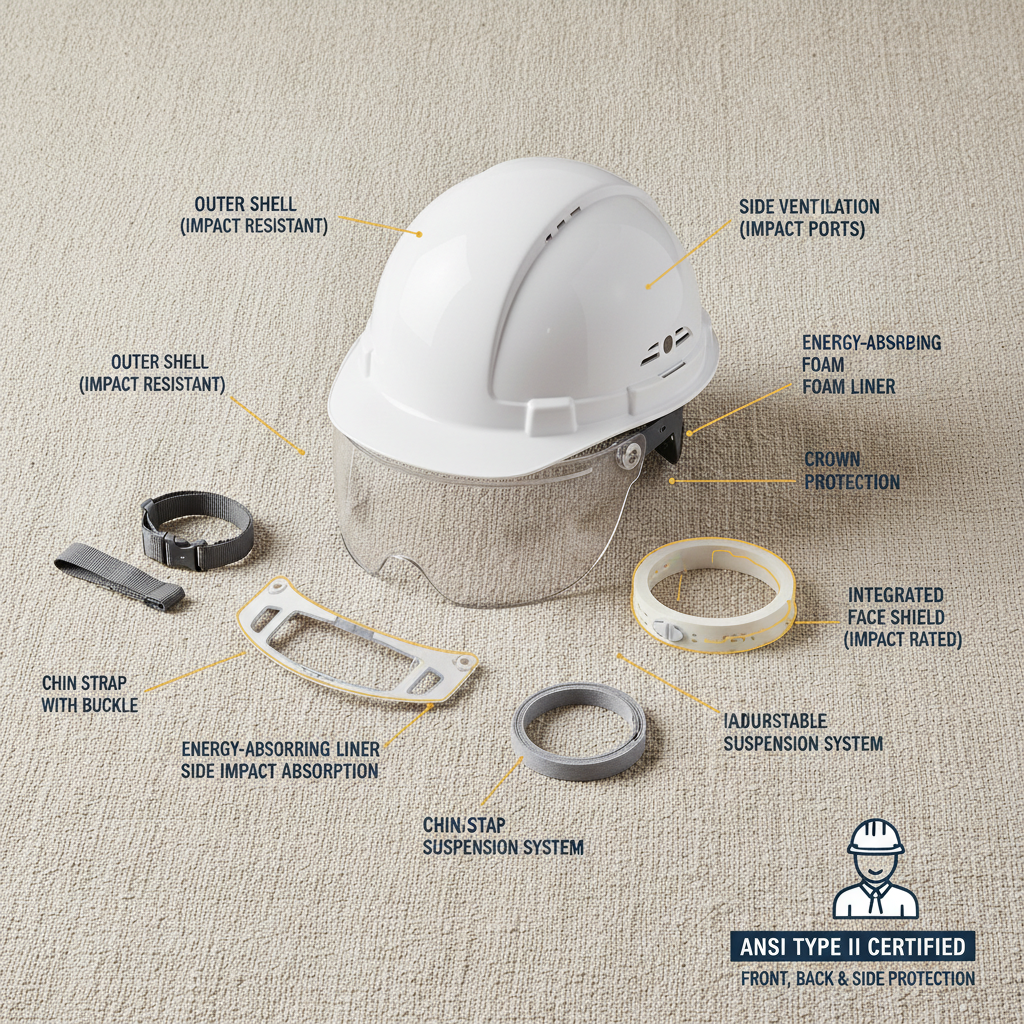
The basic construction of a hard hat typically includes a rigid outer shell, often made of high-density polyethylene (HDPE) or advanced composites, and an internal suspension system that distributes impact forces and provides a comfortable fit. These components work together to absorb and dissipate energy, minimizing the risk of head injury.
In the modern industry, the definition extends to encompass smart hard hats, integrating sensors, communication devices, and data analytics for enhanced worker safety and site management. These innovations represent a significant step toward creating a more proactive and data-driven safety culture.
Core Components and Performance Characteristics
Durability is a paramount characteristic of a quality construction safety hard hat. The outer shell must resist penetration from falling objects and withstand repeated impacts without compromising its structural integrity. Materials selection and manufacturing processes play a key role in achieving this level of robustness.
Impact absorption is another critical performance characteristic. The internal suspension system is designed to crumple or deform upon impact, absorbing energy and reducing the force transmitted to the wearer’s head. The effectiveness of this system is measured through rigorous testing procedures.
Electrical insulation is crucial in environments where there is a risk of contact with energized equipment. Type I and Type II hard hats are classified based on their ability to withstand electrical shock. Specific standards dictate the voltage levels they can safely protect against.
Global Applications and Industry Standards
Construction safety hard hats are universally utilized in the construction sector worldwide, and their use extends to numerous other industries. Mining operations in Australia and South Africa rely heavily on hard hats to protect workers from falling rocks and debris. In Europe, the EN 397 standard governs hard hat performance, while ANSI/ISEA Z89.1 is prevalent in North America.
In post-disaster relief operations, hard hats are essential PPE for rescue workers and volunteers navigating unstable structures. Similarly, in remote industrial zones like oil rigs and offshore platforms, hard hats are a non-negotiable safety requirement.
Countries with rapidly developing infrastructure, such as India and China, are experiencing increased demand for high-quality construction safety hard hats as they prioritize worker safety in large-scale projects. Compliance with international standards is becoming increasingly important for manufacturers and suppliers.
Construction Safety Hard Hat Performance Metrics
Advantages and Long-Term Value Proposition
The cost of a construction safety hard hat is minimal compared to the potential costs associated with a head injury – including medical expenses, lost productivity, and potential legal liabilities. Investing in quality head protection is a proactive step toward minimizing these risks.
Beyond the immediate safety benefits, hard hats contribute to a positive safety culture on construction sites. Their visibility serves as a constant reminder of the importance of safety protocols and encourages workers to prioritize their wellbeing. This has a long-term impact on morale and productivity.
Emerging Trends and Innovations in Head Protection
The integration of smart technology into construction safety hard hats is a rapidly evolving trend. Sensors can detect impacts, monitor worker location, and provide real-time data on environmental conditions like noise levels and air quality. This data can be used to improve safety protocols and prevent accidents.
Sustainable materials and manufacturing processes are gaining prominence. Manufacturers are exploring the use of recycled plastics and bio-based polymers to reduce the environmental impact of hard hat production. This aligns with the growing emphasis on sustainability within the construction industry.
Challenges and Future Solutions for Hard Hat Usage
One common challenge is ensuring proper fit and consistent use. Hard hats that are too loose or too tight can reduce their effectiveness. Future solutions may involve customizable suspension systems and automated fit-checking technologies.
Another challenge is overcoming worker resistance to wearing hard hats. This can be addressed through comprehensive training programs that emphasize the benefits of head protection and address any concerns workers may have. Promoting a strong safety culture is essential for fostering compliance.
The development of lighter, more comfortable, and more technologically advanced hard hats will be crucial for improving worker acceptance and enhancing safety performance in the years to come.
Summary of Common Hard Hat Issues and Potential Solutions
| Issue |
Impact Severity |
Current Mitigation Strategies |
Proposed Future Solutions |
| Improper Fit |
High |
Training, adjustable suspension |
Automated fit-checking sensors |
| Lack of Usage Compliance |
High |
Safety policies, enforcement |
Gamified safety programs, integrated sensors |
| Damage and Degradation |
Medium |
Regular inspections, replacement schedules |
Self-diagnosing materials, impact sensors |
| Limited Visibility |
Medium |
Integrated lighting, high-visibility colors |
Augmented reality displays, enhanced sensor integration |
| Thermal Discomfort |
Low |
Ventilation systems, breathable materials |
Active cooling/heating systems |
| Weight and Bulk |
Low |
Lightweight materials |
Advanced composite materials |
FAQS
Generally, a construction safety hard hat should be replaced every five years from the date of manufacture, regardless of any apparent damage. However, it should be replaced immediately if it has sustained a significant impact, shows signs of cracking or deterioration, or if the suspension system is damaged. Regular inspection is crucial to determine if replacement is needed before the five-year mark. Consult the manufacturer's guidelines for specific recommendations.
Construction safety hard hats are categorized into Type I and Type II, based on their impact and penetration resistance. Type I hard hats reduce the force of a blow to the top of the head, while Type II offer top and side protection. They are also classified by electrical class – Class E (highest protection), Class G (limited protection), and Class C (no electrical protection). Choosing the correct type depends on the specific hazards present on the job site.
Proper fit is absolutely critical. A hard hat that is too loose can fall off during an impact, rendering it ineffective. A hat that is too tight can be uncomfortable and may not provide adequate protection. Most hard hats have adjustable suspension systems that allow for a customized fit. Always follow the manufacturer's instructions for adjusting the suspension and ensure the hat sits securely on your head.
Modifying a hard hat is generally not recommended and can compromise its protective capabilities. Drilling holes can weaken the shell and reduce its impact resistance. While some manufacturers offer compatible accessories, any modifications should be made according to their guidelines. Unauthorized modifications may void the hard hat's certification and increase the risk of injury.
The shells of construction safety hard hats are most commonly made from high-density polyethylene (HDPE), a durable and cost-effective plastic. More advanced hard hats may use advanced composites like polycarbonate for increased strength and lighter weight. The suspension systems typically consist of nylon straps and a crown band designed to absorb impact forces.
Regular cleaning is essential to prevent the buildup of dirt, sweat, and chemicals that can degrade the hard hat's materials. Use mild soap and water to clean the shell and suspension system. Avoid using harsh chemicals or abrasive cleaners. Store the hard hat in a cool, dry place away from direct sunlight and extreme temperatures. Inspect the hat regularly for any signs of damage or deterioration.
Conclusion
Construction safety hard hats are a cornerstone of workplace safety in numerous industries, providing critical head protection against a wide range of hazards. From the fundamental principles of impact absorption and durability to the emerging trends of smart technology and sustainable materials, these devices continue to evolve to meet the ever-changing demands of the modern workplace. Prioritizing the proper selection, use, and maintenance of hard hats is a vital investment in worker wellbeing.
Looking ahead, ongoing innovation in materials science, sensor technology, and data analytics will drive further advancements in hard hat design and functionality. A continued commitment to research and development, combined with robust safety standards and comprehensive training programs, will ensure that construction safety hard hats remain a reliable and effective defense against head injuries for generations to come. Visit our website to learn more: www.goodsafetyhelmet.com